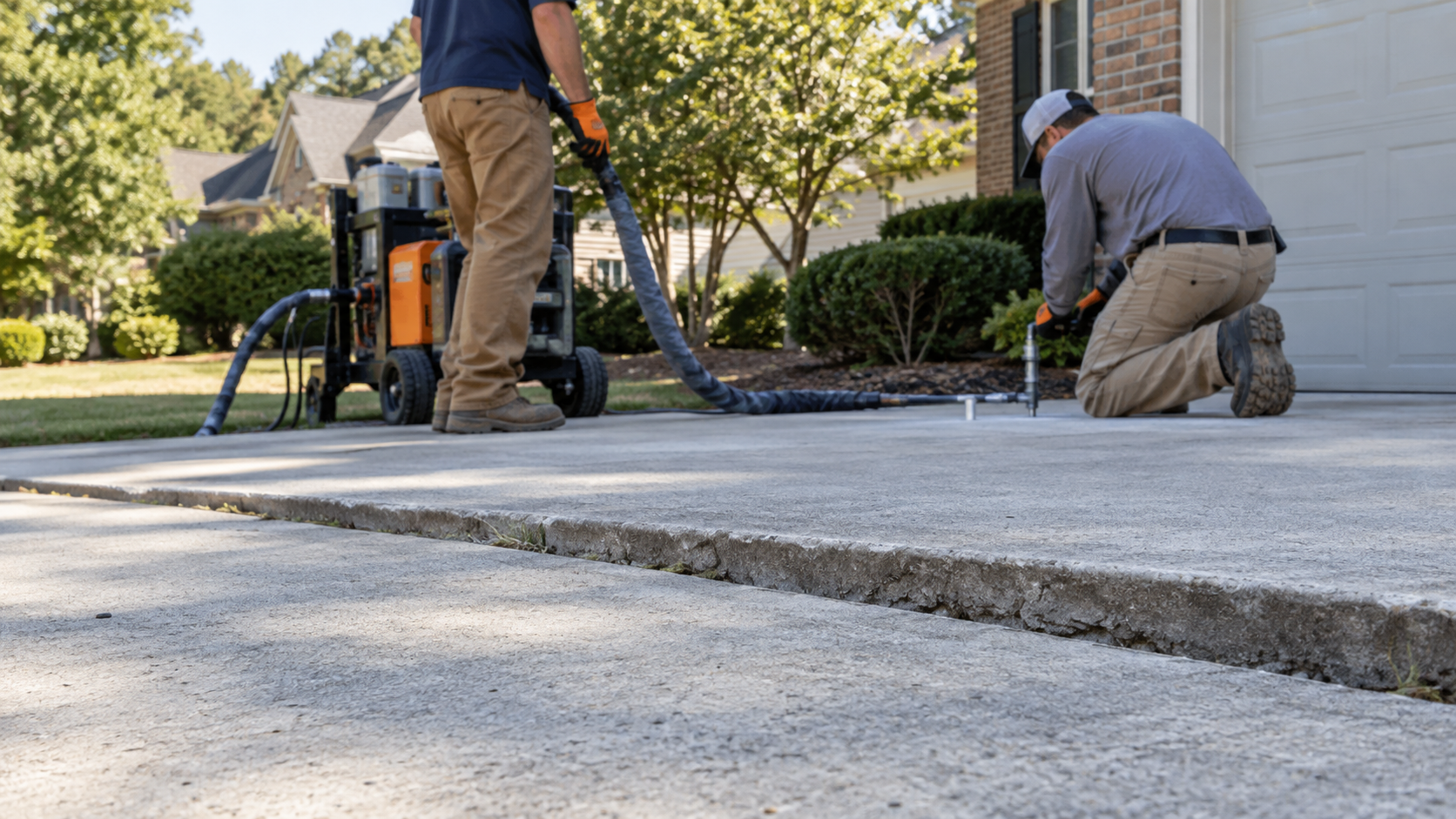
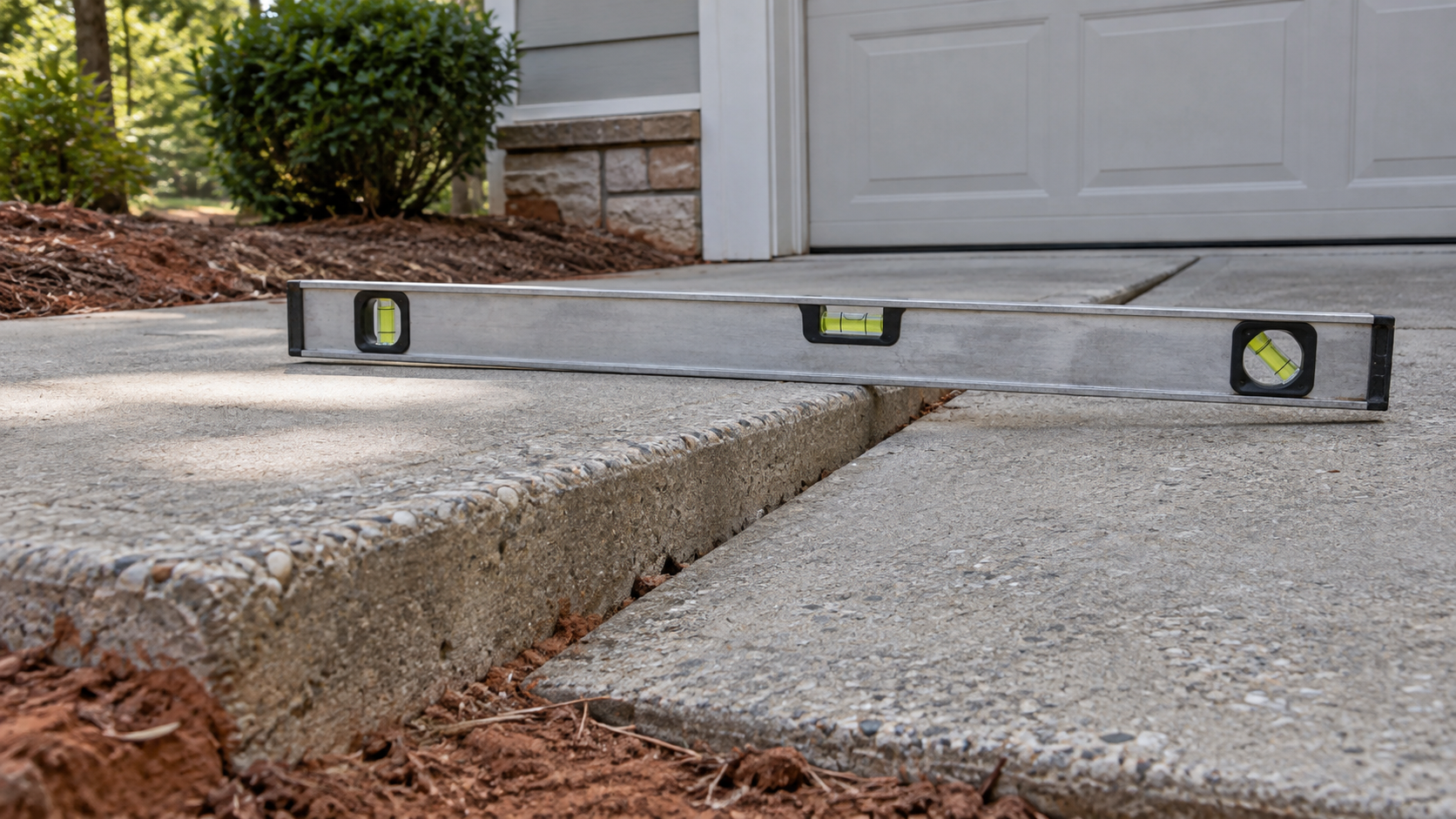
Leveling is most useful when the slab remains substantially intact but has lost support beneath it. Replacement may be more appropriate when concrete is badly broken, deteriorated, too thin, or affected by a structural problem.
Leveling may fitSettled but otherwise usable concrete
Replacement may fitSevere cracking, crumbling, or failed reinforcement
Further evaluationMovement tied to a foundation or active drainage failure
Pricing depends on the number and size of slabs, the amount of lift, access, void depth, material, and minimum service charges. Photos can help with initial screening, but a site visit is usually needed for firm pricing.
Common contributors include poorly compacted fill, water movement, erosion, downspout discharge, soil drying and shrinking, and washout along slab edges. Lifting the slab does not automatically correct the water source.
◷
How long does it take?
Many straightforward residential lifting projects can be completed without multi-day demolition and curing. Actual timing depends on access, slab condition, weather, and the provider’s chosen system.
A simpler starting point
From Uneven Slab to Provider Estimate
1
Describe the problem
Share the surface, ZIP code, contact details, and what changed.
2
We review the request
We check the service type and whether providers cover your area.
3
A provider follows up
An independent company may request photos or schedule an assessment.
4
You choose
Review the provider, scope, warranty, and price before hiring anyone.
Metro Atlanta project?
Find Out Whether the Slab May Be Liftable
Start with a no-obligation request. We’ll use the details to identify a relevant independent provider.